Efficacy

Watch the
TV Spot
Connect With Us Medicaid
Watch the
TV Spot
Connect
With Us
Medicaid

XIFAXAN cut the risk of OHE recurrence and HE-related hospitalizations in half1,2

In a clinical trial of adults with OHE

OHE recurrences during 6 months of treatment chart

Efficacy was observed early during treatment

HE recurrences and HE-related hospitalizations during 6 months of treatment chart

In a clinical trial of adults with OHE

HE recurrences and HE-related hospitalizations during 6 months of treatment chart

Efficacy was observed early during treatment

HE recurrences and HE-related hospitalizations during 6 months of treatment chart-two

*Comparison of Kaplan-Meier estimates of event-free curves showed XIFAXAN significantly reduced the risk of HE breakthrough by 58% during the 6-month treatment period.1

of patients in the placebo and XIFAXAN groups were on lactulose1

View study design

Study design1,2
  • In a randomized, placebo-controlled, double-blind, multicenter, multinational, 6-month study, the efficacy of XIFAXAN 550 mg (taken orally twice a day) was evaluated in 299 adult patients
  • Inclusion criteria: Currently in remission (Conn score of 0 or 1) from HE and ≥2 episodes of HE associated with chronic liver disease in the previous 6 months
  • Primary endpoint: Time to first breakthrough OHE episode, defined as a marked deterioration in neurological function and an increase in Conn score to grade ≥2 or an increase in Conn score and asterixis grade of 1 each if subject entered study at grade 0
  • Key secondary endpoint: HE-related hospitalization

XIFAXAN number needed to treat (NNT)2

XIFAXAN Number Needed to Treat (NNT) chart

†91% of patients in the XIFAXAN group were on concomitant lactulose.1

SEE XIFAXAN
SAFETY PROFILE

WATCH

Dr. Jesudian discuss some of the AASLD Guidelines for managing OHE

SEE MORE FROM YOUR PEERS


Align with the guidelines by using the only FDA-approved agent
indicated for the reduction in risk of OHE recurrence in adults1

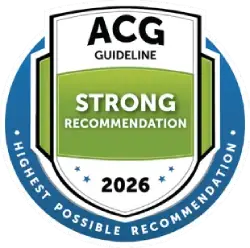
ACG Guidelines badge

XIFAXAN earned the highest possible GRADE recommendation (quality of evidence: strong, high) from ACG as an add-on therapy to lactulose to reduce the risk of overt HE recurrence after a patient has an episode while on lactulose alone.3,*

SEE ACG GUIDELINE arrow_outward
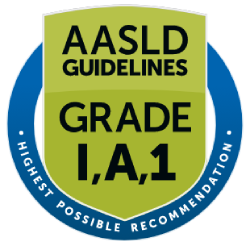
AASLD Guidelines Grade I,A,1 seal

XIFAXAN earned the highest recommendation (GRADE I,A,1) by the AASLD/EASL as an add-on therapy to lactulose to reduce the risk of OHE recurrence after a patient has a recurrence while on lactulose alone.4,†

SEE AASLD GUIDELINE arrow_outward

*Per the ACG, GRADE methodology was used to assess the quality of evidence and provide the strength of each recommendation. Strong: most patients should receive the recommended course of action; Conditional: a shared decision-making model through discussion regarding the available evidence and alternative options is appropriate. High: very confident in estimate of effect; Moderate; moderate confidence in estimate of effect; Low; limited confidence in estimate of effect; Very Low: very little confidence in estimate of effect.1

†Per the AASLD/EASL GRADE System for Evidence: GRADE II-2=cohort or case-control analytic studies; A=evidence is “high quality,” and further research is very unlikely to change our confidence in the estimated effect; and 1=recommendation is “strong,” with factors influencing strength of recommendation including the quality of evidence, presumed patient-important outcomes, and costs.4

AASLD, American Association for the Study of Liver Diseases; ACG, American College of Gastroenterology; EASL, European Association for the Study of the Liver; OHE, overt hepatic encephalopathy; PCP, primary care physician.

See More

INDICATIONS

XIFAXAN® (rifaximin) 550 mg tablets are indicated for the reduction in risk of overt hepatic encephalopathy (HE) recurrence in adults and for the treatment of irritable bowel syndrome with diarrhea (IBS-D) in adults.

XIFAXAN® (rifaximin) 550 mg tablets are indicated for the reduction in risk of overt hepatic encephalopathy (HE) recurrence in adults.

IMPORTANT SAFETY INFORMATION

  • XIFAXAN is contraindicated in patients with a hypersensitivity to rifaximin, rifamycin antimicrobial agents, or any of the components in XIFAXAN. Hypersensitivity reactions have included exfoliative dermatitis, angioneurotic edema, and anaphylaxis.
  • Clostridium difficile-associated diarrhea (CDAD) has been reported with use of nearly all antibacterial agents, including XIFAXAN, and may range in severity from mild diarrhea to fatal colitis. If CDAD is suspected or confirmed, ongoing antibiotic use not directed against C. difficile may need to be discontinued.
See Less

INDICATIONS

XIFAXAN® (rifaximin) 550 mg tablets are indicated for the reduction in risk of overt hepatic encephalopathy (HE) recurrence in adults and for the treatment of irritable bowel syndrome with diarrhea (IBS-D) in adults.

IMPORTANT SAFETY INFORMATION

  • XIFAXAN is contraindicated in patients with a hypersensitivity to rifaximin, rifamycin antimicrobial agents, or any of the components in XIFAXAN. Hypersensitivity reactions have included exfoliative dermatitis, angioneurotic edema, and anaphylaxis.
  • Clostridium difficile-associated diarrhea (CDAD) has been reported with use of nearly all antibacterial agents, including XIFAXAN, and may range in severity from mild diarrhea to fatal colitis. If CDAD is suspected or confirmed, ongoing antibiotic use not directed against C. difficile may need to be discontinued.
  • There is an increased systemic exposure in patients with severe (Child-Pugh Class C) hepatic impairment. Caution should be exercised when administering XIFAXAN to these patients.
  • Caution should be exercised when concomitant use of XIFAXAN and P-glycoprotein (P-gp) and/or OATPs inhibitors is needed. Concomitant administration of cyclosporine, an inhibitor of P-gp and OATPs, significantly increased the systemic exposure of rifaximin. In patients with hepatic impairment, a potential additive effect of reduced metabolism and concomitant P-gp inhibitors may further increase the systemic exposure to rifaximin.
  • In clinical studies, the most common adverse reactions for XIFAXAN (alone or in combination with lactulose) were:
    – HE (≥10%): Peripheral edema (17%), constipation (16%), nausea (15%), fatigue (14%), insomnia (14%), ascites (13%), dizziness (13%), urinary tract infection (12%), anemia (10%), and pruritus (10%)
    – IBS-D (≥2%): Nausea (3%), ALT increased (2%)
  • INR changes have been reported in patients receiving rifaximin and warfarin concomitantly. Monitor INR and prothrombin time. Dose adjustment of warfarin may be required.
  • XIFAXAN may cause fetal harm. Advise pregnant women of the potential risk to a fetus.

To report SUSPECTED ADVERSE REACTIONS, contact Salix Pharmaceuticals at 1-800-321-4576 or FDA at 1-800-FDA-1088 or www.fda.gov/medwatch.

To report SUSPECTED ADVERSE REACTIONS, contact Salix Pharmaceuticals at 1-800-321-4576 or FDA at 1-800-FDA-1088 or www.fda.gov/medwatch.

Please click here for full Prescribing Information.

References: 1. XIFAXAN. Prescribing information. Salix Pharmaceuticals; 2023. Accessed September 19, 2025. https://shared.salix.com/globalassets/pi/xifaxan550-pi.pdf 2. Bass NM, Mullen KD, Sanyal A, et al. Rifaximin treatment in hepatic encephalopathy. N Engl J Med. 2010;362(12):1071-1081. doi:10.1056/NEJMoa0907893 3. Bajaj JS, Jakab SS, Jesudian AB, et al. ACG clinical guideline: Hepatic encephalopathy. Am J Gastroenterol. 2026;121:588-618. 4. Vilstrup H, Amodio P, Bajaj J, et al. Hepatic encephalopathy in chronic liver disease: 2014 practice guideline by the American Association for the Study of Liver Diseases and the European Association for the Study of the Liver. Hepatology. 2014;60(2):715-735. doi:10.1002/hep.27210

XIF.0181.USA.23V7.0